Search This Blog

Wednesday, April 25, 2007

Tailored Nanowires for electron extraction


A cross-section of the nanoscale coaxial cable, in which nitrogen, phosphorus, and gallium atoms are shown in blue, yellow, and magenta, respectively. White spheres represent hydrogen atoms, which help render the surface of the wire chemically non-reactive.

A nano scale co-axial technique developed at the LBNL shows promise in increasing the yield from solar power generators. Read more here. Excerpt from the article.

The nanowire, developed by researchers from the National Renewable Energy Laboratory (NREL) and Lawrence Berkeley National Laboratory, may solve several problems currently associated with renewable energy applications.
One overarching problem is that current semiconducting materials with the potential for use in renewable energy devices lack one key characteristic. When electrons in these materials are excited by light and jump to higher energy levels (leaving vacancies, known as “holes,” in the lower levels), both the electrons and the holes typically move around in the same region. Thus, they tend to recombine. This is desirable for certain applications, such as light-emitting devices, where electron-hole recombination produces light, but is not ideal for renewable energy devices. A better scenario is the separation of the excited electrons from the holes such that, in the case of solar cells, for example, the electrons can be drawn off and used for electricity.

“Our nanowires were designed to provide this feature, along with a superior electrical conductivity,” said NREL materials scientist Yong Zhang, the study's corresponding researcher, to PhysOrg.com. “Both of these properties are critical in order for renewable energy devices to reach their ultimate efficiency limits.”

Saturday, April 14, 2007

Quantum chlorophyll


The simplest things in nature that make life possible are often the most difficult to comprehend. A recent theory on why plants are green threw up surprising results when it emerged that vegetation on earth works in the red and blue range of solar radiation and not the green. This was even more surprising given the fact that the sun pumps out maximum wattage in the green range. This is probably why the human eye is most sensitive to it. The next big surprise is that chlorophyll seems to use quantum effects to do its magic. In a recent announcement by Lawrence Berkeley National Laboratory & University of California (UC) at Berkeley:

We have obtained the first direct evidence that remarkably long-lived wavelike electronic quantum coherence plays an important part in energy transfer processes during photosynthesis," said Graham Fleming, the principal investigator for the study. “This wavelike characteristic can explain the extreme efficiency of the energy transfer because it enables the system to simultaneously sample all the potential energy pathways and choose the most efficient one.” The classical hopping description of the energy transfer process is both inadequate and inaccurate," said Fleming. "It gives the wrong picture of how the process actually works, and misses a crucial aspect of the reason for the wonderful efficiency."

Co-authoring the Nature paper with Fleming were Gregory Engel, who was first author, Tessa Calhoun, Elizabeth Read, Tae-Kyu Ahn, Tomas Mancal and Yuan-Chung Cheng, all of whom held joint appointments with Berkeley Lab’s Physical Biosciences Division and the UC Berkeley Chemistry Department at the time of the study, plus Robert Blankenship, from the Washington University in St. Louis.

The photosynthetic technique for transferring energy from one molecular system to another should make any short-list of Mother Nature’s spectacular accomplishments. If we can learn enough to emulate this process, we might be able to create artificial versions of photosynthesis that would help us effectively tap into the sun as a clean, efficient, sustainable and carbon-neutral source of energy.

Towards this end, Fleming and his research group have developed a technique called two-dimensional electronic spectroscopy that enables them to follow the flow of light-induced excitation energy through molecular complexes with femtosecond temporal resolution. The technique involves sequentially flashing a sample with femtosecond pulses of light from three laser beams. A fourth beam is used as a local oscillator to amplify and detect the resulting spectroscopic signals as the excitation energy from the laser lights is transferred from one molecule to the next. (The excitation energy changes the way each molecule absorbs and emits light.)

Fleming has compared 2-D electronic spectroscopy to the technique used in the early super-heterodyne radios, where an incoming high frequency radio signal was converted by an oscillator to a lower frequency for more controllable amplification and better reception. In the case of 2-D electronic spectroscopy, scientists can track the transfer of energy between molecules that are coupled (connected) through their electronic and vibrational states in any photoactive system, macromolecular assembly or nanostructure.

Fleming and his group first described 2-D electronic spectroscopy in a 2005 Nature paper, when they used the technique to observe electronic couplings in the Fenna-Matthews-Olson (FMO) photosynthetic light-harvesting protein, a molecular complex in green sulphur bacteria.

The bavarians switch to LED


A highly distinctive LED light guide system forms the tail-light of the redesigned BMW 5 Series.
Three and a half years after its introduction, the BMW 5 Series has been given a facelift with characteristic design accents at the front and rear, several of which are based around LED lighting systems developed by Hella.

GaN-on-glass process could yield 48% savings for LED epitaxy

A cost of ownership model for a deposition process developed by BluGlass Ltd could result in significant cost savings for LED manufacturing.
Courtesy of Semiconductor Today.

BluGlass Ltd, a Sydney, Australia-based company spun off from Macquarie University in mid-2005, has released figures suggesting that its remote plasma (RP) CVD process for low-temperature deposition of GaN onto glass substrates (rather than conventional MOCVD on sapphire) can cut the cost of manufacturing GaN-based LEDs at both the epiwafer level and the assembled device level.

Independent assessment was carried out by US-based firm Wright, Williams & Kelly Inc (WWK), a cost -of-ownership modeling group for the semiconductor industry.

Wafer-level analysis showed a cost saving of 48% for RPCVD, driven by a significant reduction in materials and consumables costs. Also, in a simple package, the assessment showed that the RPCVD process leads to a 10% cost advantage at the final assembly level for a simple blue LED device.

BluGlass has demonstrated deposition of GaN on 6-inch glass wafers, although the company has yet to demonstrate high quality emission from LED device layers on glass.

Friday, April 13, 2007

T.Rex was a big chicken with teeth


In a path breaking discovery Paleontologist Jack Horner & team have found co-relations in the collagen found in Tyrannosaurus fossils with modern birds. Read more here (yuck was a site :)

Solar update: Nano tower arrays

Georgia tech has come up with an unique 3-D structuring nano technology that allows the creation of tiny nano towers on PV panels. The critical difference seems to be that these panels (or arrays if you will) increase the surface area available for absorption of solar photons due to the 3D structure of Si at the nano level. This could give crystalline Si in solar a much needed boost (and conversely impact thin film solar) as the yields are reported to go up by about 60 times. As observed in this blog, the critical metric for PV costing is the weight of silicon per watt of generation. This technique will hopefully allow us to generate 180 A from the amount of Si used in a conventional 10 W panel that generates about 3 A per day. However there are sill a number of challenges that he georgia tech team has to face as the internal resistance of the cells is too high for commercial use as it does not build up enough voltage. However cracking this is more a question of when rather than if (imho).
To understand the economics of this, consider a drop in solar panel investment by a factor of at least 50 as more than 80 % of the investment in a solar lighting system is the PV used. So an off grid home that invests about $7000 for their power solution will get away with an investment of about $140 for the same functionality. Of course i am mixing physics with trade margins and economics and i am pretty sure that the sale price will not reflect this magnitude jump. Even a factor of 2 or 3 reduction price of PV will be a disruptive innovation with potential of changing the energy map of the world.

Thursday, April 12, 2007

Toshiba-Matsuhita announce polymer TV


Blakest black and vibrant colours ! This seems to be the USP for the latest and gratest in TV technology. OLED's have matured enough for this application. From the Digital trends site

Toshiba and Matsushita have announced they plan to introduce organic light-emitting diode (OLED) panels for use in televisions within three years via a joint venture, Toshiba Matsushita Display Technology Company, (TMD). The joint venture has introduced a 20.8-inch OLED display panel, and aims to begin commercial production of OLED panels for flat-screen televisions by 2009.

Interview with Professor Russ Dupuis


An excellent interview with Prof.Dupis one of the acknowledged fathers of LED's and for that matter even MOCVD. Its ironical to juxtapose this post with the previous one. Read more here.

Oleg Vladimirovich Losev : History sometimes remembers

While the generally held view is that LED's were invented in the 60's by american researchers, electrophoresis has been known for more than 100 years. In a new twist it emerges that LED's were invented and even patented by a russian genius Oleg Losev in the 1940's ! The irony is that Losev apparently died of starvation in Leningrad during the Nazi invasion of Russia.New Scientist has this to say
If you look in an encyclopaedia, the LED was invented by four independent American research groups in 1962. But the latest edition of Nature photonics reveals that it was actually discovered by a little-known Russian genius around 40 years earlier.

Oleg Vladimirovich Losev was a radio technician with a fierce talent. In the mid 1920s he noticed that diodes used in radio receivers emitted light when current was passed through them. Then, in 1927, he published details in a Russian journal of the first ever LED. Nikolay Zheludev, at the University of Southampton, has dug up Losev's story.

Losev also published on his discoveries in German and British journals. In sixteen papers between 1924 and 1930 he comprehensively detailed the function of his LED. He used Einstein's then new quantum theory to explain the way electrons dropping in energy produced the light without releasing heat. But a letter he wrote to Einstein asking for help developing the theory of LEDs received no reply.

Most significantly, in 1927 Losev filed a patent for a 'light relay' that used his devices 'for fast telegraphic and telephone communication, transmission of images and other applications...' He therefore foreshadowed the development of opto-electronics, which is fundamental to the fibreoptic links that make modern communcations possible.

Impressive stuff. But sadly not work that anyone picked up to take further. And Losev died of hunger in 1942 during the blockade of Leningrad, at the age of 39. In November 1941, he tried in vain to get a paper based on his discovery that "using semiconductors, a three-terminal system may be constructed analogous to a [vacuum] triode” out of Leningrad. It didn't make it. Zheludev asks: "Was it a paper on what we now know as a transistor? We shall never
know for certain unless his manuscript is found."

Zheludev also points out that Henry Round, assistant to radio pioneer Marconi, was the first to discover that semiconductors could produce light, some hundred years ago. He published only a very short note on the matter and made no further investigations. But the piece was never seen by Losev, who must be retrospectively declared the inventor of the LED.

Monday, April 09, 2007

Death of the cell phone charger


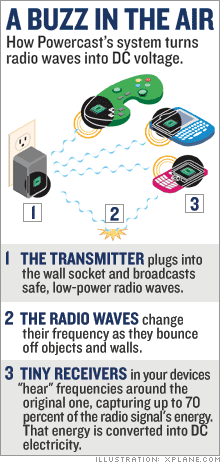
Wireless power transmission has been a moving target.One is typically accused of smoking something if the topic comes up :) However some breakthroughs are happening. This is very important for the low voltage lighting industry (aka LED lighting). Think of no wiring for you room lighting. The sources can be made portable and all that you need to do is ensure that it is within range of the transmitter. Will be a killer app for commercial and home lighting if there is no wiring to do ! From the CNN.com article:
How much money could you make from a technology that replaces electrical wires? A startup called Powercast, along with the more than 100 companies that have inked agreements with it, is about to start finding out. Powercast and its first major partner, electronics giant Philips, are set to launch their first device powered by electricity broadcast through the air.

It may sound futuristic, but Powercast's platform uses nothing more complex than a radio--and is cheap enough for just about any company to incorporate into a product. A transmitter plugs into the wall, and a dime-size receiver (the real innovation, costing about $5 to make) can be embedded into any low-voltage device. The receiver turns radio waves into DC electricity, recharging the device's battery at a distance of up to 3 feet.

Picture your cell phone charging up the second you sit down at your desk, and you start to get a sense of the opportunity. How big can it get? "The sky's the limit," says John Shearer, Powercast's founder and CEO. He estimates shipping "many millions of units" by the end of 2008.

For years, electricity experts said this kind of thing couldn't be done. "If you had asked me seven months ago if this was possible, I would have said, 'Are you dreaming? Have you been smoking something?'" says Govi Rao, vice president and general manager of solid-state lighting at Philips (Charts). "But to see it work is just amazing. It could revolutionize what we know about power."
So impressed was Rao after witnessing Powercast's demo last summer that he walked away jotting down a list of the industries to which the technology could immediately be applied: lighting, peripherals, all kinds of handheld electronics. Philips partnered with Powercast last July, and their first joint product, a wirelessly powered LED light stick, will hit the market this year. Computer peripherals, such as a wireless keyboard and mouse, will follow in 2008.

Broadcasting power through the air isn't a new idea. Researchers have experimented with capturing the radiation in radio frequency at high power but had difficulty capturing it at consumer-friendly low power. "You'd have energy bouncing off the walls and arriving in a wide range of voltages," says Zoya Popovic, an electrical engineering professor at the University of Colorado who works on wireless electricity projects for the U.S. military.

That's where Shearer came in. A former physicist based in Pittsburgh, he and his team spent four years poring over wireless electricity research in a lab hidden behind his family's coffee house. He figured much of the energy bouncing off walls could be captured. All you had to do was build a receiver that could act like a radio tuned to many frequencies at once.

"I realized we wanted to grab that static and harness it," Shearer says. "It's all energy."

0-60 in just 3.1 seconds

A hyper fast lithium based electric car that seems to blow the pants of any thing else in featured on Popular mechanics.Seeing is believing.

'

Saturday, April 07, 2007

nenpimania : Ninja Hybrid Hackers


A new wave of Japanese hackers who squeeze more out of their Petro Electric Hybrids have hit the scene. They compete with each other and one thing they have in common is that they seem to beat the toyota engineers in the quest for hybrid nirvana. Bloomberg.com reports :
Toya, a 56-year-old manager for a tofu maker in central Japan, puts special tires on his Prius, tapes plastic and cardboard over the engine and blocks the grill with foam rubber. He drives without shoes and hacks into his car's computer -- all in the pursuit of maximum distance with minimum gasoline.

Toya is one of about 100 nenpimania, Japanese for ``mileage maniacs,'' or hybrid owners who compete against each other to squeeze as much as 115 miles per gallon out of their cars. In a country where gasoline costs more than $4 a gallon, at least $1 more than the U.S. price, enthusiasts tweak their cars and hone driving techniques to cut fuel bills and gain bragging rights.

``My wife thinks I've joined some strange secret society,'' Toya said in January at a nenpimania gathering in Nagoya in central Japan.

Mileage maniacs aren't alone in pushing the limits of hybrid vehicles. As U.S. automakers General Motors Corp. and Ford Motor Co. race to introduce their own models, first rolled out by Japanese companies in 1997, engineers at Toyota and Honda Motor Co. are trying to boost hybrid performance to maintain their advantage.

``With higher oil prices and tightening environmental regulations, people will focus more on hybrid technology,'' said Koji Endo, an auto analyst at Credit Suisse First Boston in Tokyo.

Hybrid Power

Hybrids combine a conventional gasoline engine with an electric motor. The motor powers the vehicle at low speeds, and the gasoline engine kicks in as the car accelerates. The motor uses the motion of the wheels to recharge the batteries.

Toya said he switched to a hybrid after years of driving sports cars, trading muscle ``for the fun of maximum mileage.'' Nicknamed ``The Shogun,'' Toya said he drove 1,000 miles (1,600 kilometers) on a single 13-gallon (49-liter) tank 17 times last year, an average of 79 mpg. At the advertised efficiency rate, a driver would get 715 miles per tank.

Toya isn't the best, though. A woman from Akita prefecture, nicknamed ``Teddy-Girl,'' is cited on mileage maniac Web sites as getting almost 116 mpg. That's enough to drive from New York to Wichita, Kansas -- 1,386 miles -- without refilling.

By comparison, a 2007 two-wheel drive Ford F-150 pickup running at peak efficiency burns through five times as much gasoline over the same distance.

Friday, April 06, 2007

LED lighting in Cadillac CTS sedan

Rear of the Cadillac CTS, showing vertical LED light tubes next to the vertical rear light (containing multiple red LEDs). Below this is a white backup (reversing) light comprising two high-power white LEDs. A horizontal strip of red LEDs run above the badge, and comprises the center high-mounted stop lamp (CHMSL).
The beauty of light is its interpretation by the human brain. This seems to be the meme driving auto designers who are increasingly using LED accent and niche lights to visually enhance the overall automotive experience. While Daimler and Audi have been the leaders in this (the high end S class, not your pedestrian C class :) the yankees seem to have woken up to the possibilities of using LED's in auto lighting (this is happening even in India and my firm is neck deep in auto-LED projects). From LED Mag

Cadillac focused on new lighting systems to make the 2008 CTS sport sedan as recognizable at night as its new styling does in the light of day, according to an article in the Detroit Free Press.

A total of 127 LEDs illuminate the CTS's interior and exterior, creating a unique look that builds on the brand's heritage of innovative lighting and design, according to Cadillac product director John Howell.

LED light pipes -- clear tubes that direct light -- for the CTS's brake, turn, backup and running lights are the latest example of the vertical tail lamps that have distinguished Cadillacs since 1948.

"Lighting is one of the last frontiers to differentiate cars," said CTS design director John Manoogian, adding that "countless hours and days" went into designing the CTS's stacked vertical lights. "We decided to make lighting a key element of the car's appearance and character."

The interior also uses white ambient LED lighting in the door pulls, foot wells and recessed between the upper and lower instrument panels. The result, says Cadillac, is a dramatic effect similar to recessed lighting used in contemporary homes.

Kiwi boffins achieve PV breakthrough


In an exciting development Massey Univ in Kiwiland have perfected a new Titanium dioxide based syntethic dye that replaces Si in PV panels. this could be a major beakthrough as the blurb seems to indicate that the technology uses amorphous crystals (an oxymoron) and will work in low light conditions. From Stuff

New solar cells developed by Massey University don't need direct sunlight to operate and use a patented range of dyes that can be impregnated in roofs, window glass and eventually even clothing to produce power.

This means teenagers could one day be wearing jackets that will recharge their equivalents of cellphones, iPods and other battery- driven devices.

The breakthrough is a development of the university's Nanomaterials Research Centre and has attracted world-wide interest already - particularly from Australia and Japan.

Researchers at the centre have developed a range of synthetic dyes from simple organic compounds closely related to those found in nature, where light-harvesting pigments are used by plants for photosynthesis.

"This is a proof-of-concept cell," said researcher Wayne Campbell, pointing to a desktop demonstration model.

"Within two to three years we will have developed a prototype for real applications. "The technology could be sold off already, but it would be a shame to get rid of it now."

The key to everything is the ability of the synthetic dyes to pass on the energy that reaches them - something that mere coloured water could not do.

"We now have the most efficient porphyrin dye in the world," said the centre's director, Ashton Partridge.

"It is the most efficient ever made. While others are doing related work, in this aspect we are the world leaders."

The development of the dyes has taken about 10 years and was accomplished with funding from the Royal Society of New Zealand for fundamental work and the Foundation for Research, Science and Technology in the later stages.

Now the team is seeking extra funding to go commercial.

"This particular technology does not require the large infrastructure required for silicon chips and the like," said Professor Partridge. It lends itself to being taken up by local and New Zealand industries.

Other dyes being tested in the cells are based on haemoglobin, the compound that gives blood its colour.

Dr Campbell said that unlike silicone-based solar cells, the dye- based cells are still able to operate in low-light conditions, making them ideal for cloudy climates.

They are also more environmentally friendly because they are made from titanium dioxide - an abundant and non-toxic, white mineral available from New Zealand's black sand.

Titanium dioxide is used already in consumer products such as toothpaste, white paints and cosmetics.

"The refining of silicon, although a very abundant mineral, is energy- hungry and very expensive," he said.

Wednesday, April 04, 2007

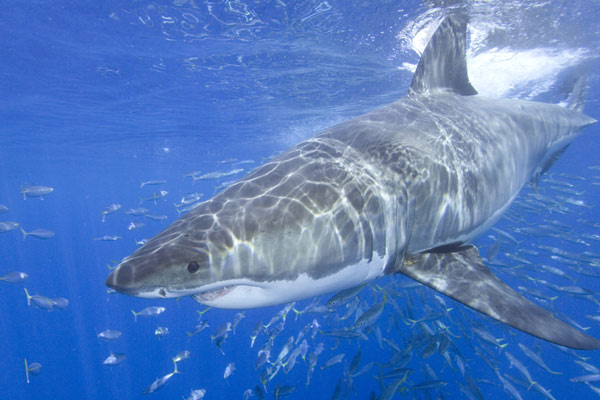
Sharks in trouble


Sharks have been in trouble for a while now as they are apex predators in thier environment and have a very slow reproduction rate. I personally gave up eating sharks (except on very rare occasions) more than 5 years ago. This was due to the fact that immature sharks were coming into the market. George monbiot has this to say on shark conservation.

Sharks deserve the conservation status we give to the giant panda


Marine predators are on the verge of extinction, but the fishing industry still rips the environment to shreds with impunity

If these animals lived on land there would be a global outcry. But the great beasts roaming the savannahs of the open seas summon no such support. Big sharks, giant tuna, marlin and swordfish should have the conservation status of the giant panda or the snow leopard. Yet still we believe it is acceptable for fishmongers to sell them and celebrity chefs to teach us how to cook them.

A study in this week's edition of Science reveals the disastrous collapse of the ocean's megafauna. The great sharks are now wobbling on the edge of extinction. Since 1972 the number of blacktip sharks has fallen by 93%, tiger sharks by 97% and bull sharks, dusky sharks and smooth hammerheads by 99%. Just about every population of major predators is now in freefall. Another paper, published in Nature four years ago, shows that over 90% of large predatory fishes throughout the global oceans have gone.

Tuesday, April 03, 2007

Tata inks deal for Indonesian coal

Tata Power has neatly bought a 30 % stake in PT Kaltim Prima Coal (KPC) and PT Arutmin Indonesia for US$1.3 billion. While the rest of the world is worried about the Asian twins (India and China) eating into the golbal oil reserves, these deals slip under the scanner. Coal is and will remain the mainstay for power generation for a long time to come. This includes china and the US. What is interesting is that India has enormous coal reserves of her own. Read more in the Jakarta post

LED cityscape lighting


Survey shows LEDs improve public’s perceptions of city safety. From LED Mag

When Raleigh, NC, the first "LED City", and Cree, Inc. turned on LEDs in the municipal parking garage, people’s opinion of the quality of the lighting improved threefold.

Raleigh exchanged the previous garage fixtures and their dull orange light for LED fixtures with bright white light, and people felt safer. The number of respondents who perceived the garage as "very safe" increased by 76% after the LED fixtures were installed, according to a survey by Mindwave Research of Austin, TX.

Cree (Nasdaq: CREE) produces LEDs that provide a source of energy efficient light which can serve as the foundation for cost-effective lighting solutions. Lighting Science Group Corporation (OTCBB: LSGP) of Dallas, TX, supplied the LED fixtures installed in the Raleigh garage.

"LED technology provides a clear benefit to municipal infrastructure, as well as to the citizens it serves," said Charles Meeker, mayor of Raleigh. "This survey shows that LEDs can do more than improve light quality. In addition to the proven environmental and energy efficiency benefits the city has already documented, the survey shows that LEDs’ bright white light can help improve public feelings of safety in city spaces."

The survey results showed that the parking garage generated a more positive reaction from most of the respondents after the addition of LED fixtures:

* Both men and women felt significantly safer post-installation: 74% rated the garage as feeling "very safe," while only 2% did not. These figures contrast with the pre-installation numbers: only 42% felt "very safe" with the original lighting, and 13% did not.
* The percentage of respondents who gave the garage an overall rating of "excellent" increased by 100%. The number of people who rated it as "poor" decreased from 8 to 1%.
* The lighting quality of the garage was "excellent" according to 86% of the respondents, a 258% increase from pre-installation respondents. The number of people who rated it as "poor" decreased from 18 to 2%.
* The cleanliness of the parking garage was perceived as "excellent" by 76% of the respondents, while only 58% rated it this way before the LEDs were installed, showing a 31% increase.

This announcement comes shortly after Raleigh agreed to become the nation's first LED City. The LED City initiative focuses on installing LED lighting, based on Cree's LEDs, throughout the city to save energy and money, and boost the quality of life for its residents by using the best lighting technology commercially available. As a result, the city has conserved energy and improved the lighting of its municipal city parking facility, the first of a series of projects aimed at delivering the environmental and economic benefits of LED lighting throughout Raleigh’s "living laboratory."

US Supreme court asks EPA to regulate Auto emmisions

A landmark case and a surprising judgement given the lobbying power of the US auto industry and the EPA's own reluctace to do so (wonder why). Excerpt below

Supreme Court Declares EPA Reasons for Not Regulating Carbon "Arbitrary, Capricious"

This is a landmark case, or at the least the beginning of a series of landmark cases: in a 5-4 decision, the Supreme Court today sent the issue of whether or not the EPA can regulate carbon dioxide back to the lower courts, declaring the EPA's decision not to regulate carbon emissions "arbitrary, capricious or otherwise not in accordance with law."

The EPA had previously declared that the Clean Air Act does not give it the authority to regulate carbon dioxide and other heat-trapping greenhouse gases.

Monbiot on biofuels - 2

Monbiot has more to say on biofuels and this time around has hard data to substantiate his argument. As ever he is right... From the Guardian op-ed.

It used to be a matter of good intentions gone awry. Now it is plain fraud. The governments using biofuel to tackle global warming know that it causes more harm than good. But they plough on regardless. In theory, fuels made from plants can reduce the amount of carbon dioxide emitted by cars and trucks. Plants absorb carbon as they grow - it is released again when the fuel is burned. By encouraging oil companies to switch from fossil plants to living ones, governments on both sides of the Atlantic claim to be "decarbonising" our transport networks. So what's wrong with these programmes? Only that they are a formula for environmental and humanitarian disaster. In 2004 I warned, on these pages, that biofuels would set up a competition for food between cars and people. The people would necessarily lose: those who can afford to drive are richer than those who are in danger of starvation. It would also lead to the destruction of rainforests and other important habitats. I received more abuse than I've had for any other column - except for when I attacked the 9/11 conspiracists. I was told my claims were ridiculous, laughable, impossible. Well in one respect I was wrong. I thought these effects wouldn't materialise for many years. They are happening already.

Since the beginning of last year, the price of maize has doubled. The price of wheat has also reached a 10-year high, while global stockpiles of both grains have reached 25-year lows. Already there have been food riots in Mexico and reports that the poor are feeling the strain all over the world. The US department of agriculture warns that "if we have a drought or a very poor harvest, we could see the sort of volatility we saw in the 1970s, and if it does not happen this year, we are also forecasting lower stockpiles next year". According to the UN food and agriculture organisation, the main reason is the demand for ethanol: the alcohol used for motor fuel, which can be made from maize and wheat.


Monbiot's previous mentions in this blog

battle-with-entropy

Bio fuels 1
Idiot science

Monday, April 02, 2007

The greaseball challenge


The Greaseball Challenge is a charity biofuel car rally from the USA to Central America. Inspired by the tradition of the classic car race, Greaseball is a cross-continental adventure promoting sustainability on a shoestring using renewable fuels.

The inaugural Greaseball Challenge departs on April 1, 2007. Armed with nothing but a sense of adventure and some cheesecloth, five teams will drive 4,500 miles on grease power from the USA to Mexico, Guatemala, Honduras, Nicaragua and Costa Rica.

Rudolf Diesel, who invented the diesel engine, demonstrated one of his first engines running on peanut oil at the World Fair in 1900. He said at the time "The use of vegetable oils for engine fuels may seem insignificant today. But such oils may in the course of time become as important as petroleum…”.

Despite his prediction, veggie oils have remained on the “specials” menu ever since, along with just about every other renewable fuel source. Veggie car enthusiasts make a distinction between waste vegetable oil (WVO) discarded from restaurants and straight vegetable oil (SVO). Filtering waste grease is a must or bits of fried chicken will clog up your fuel lines.

Read More here.